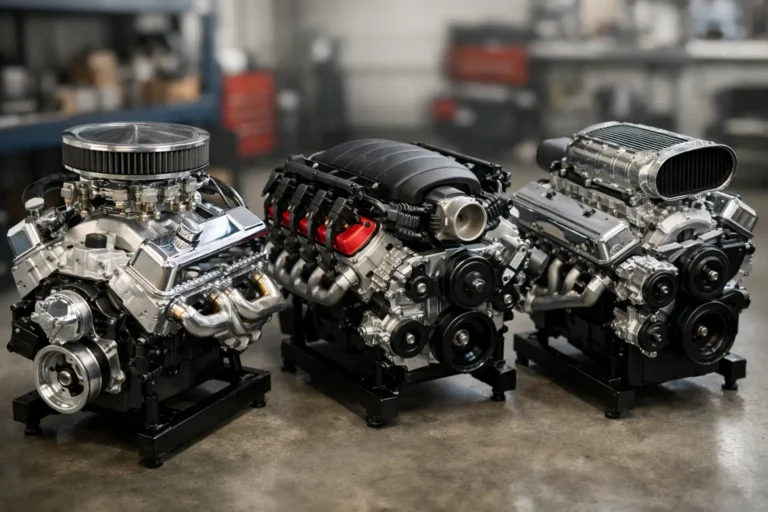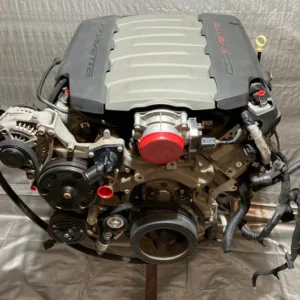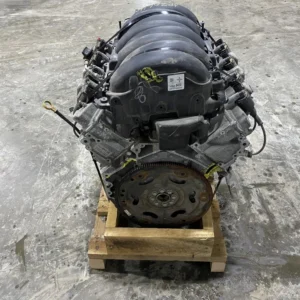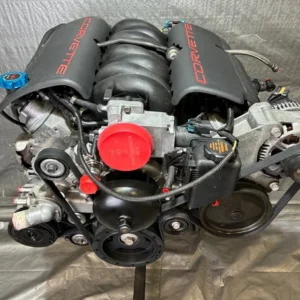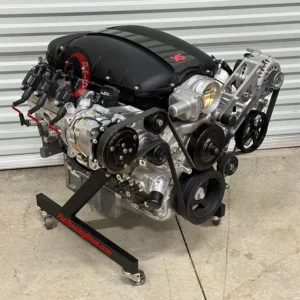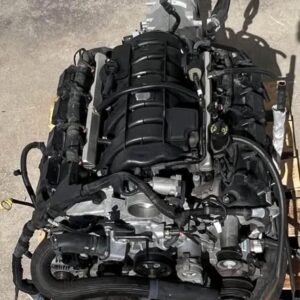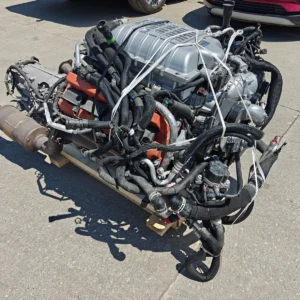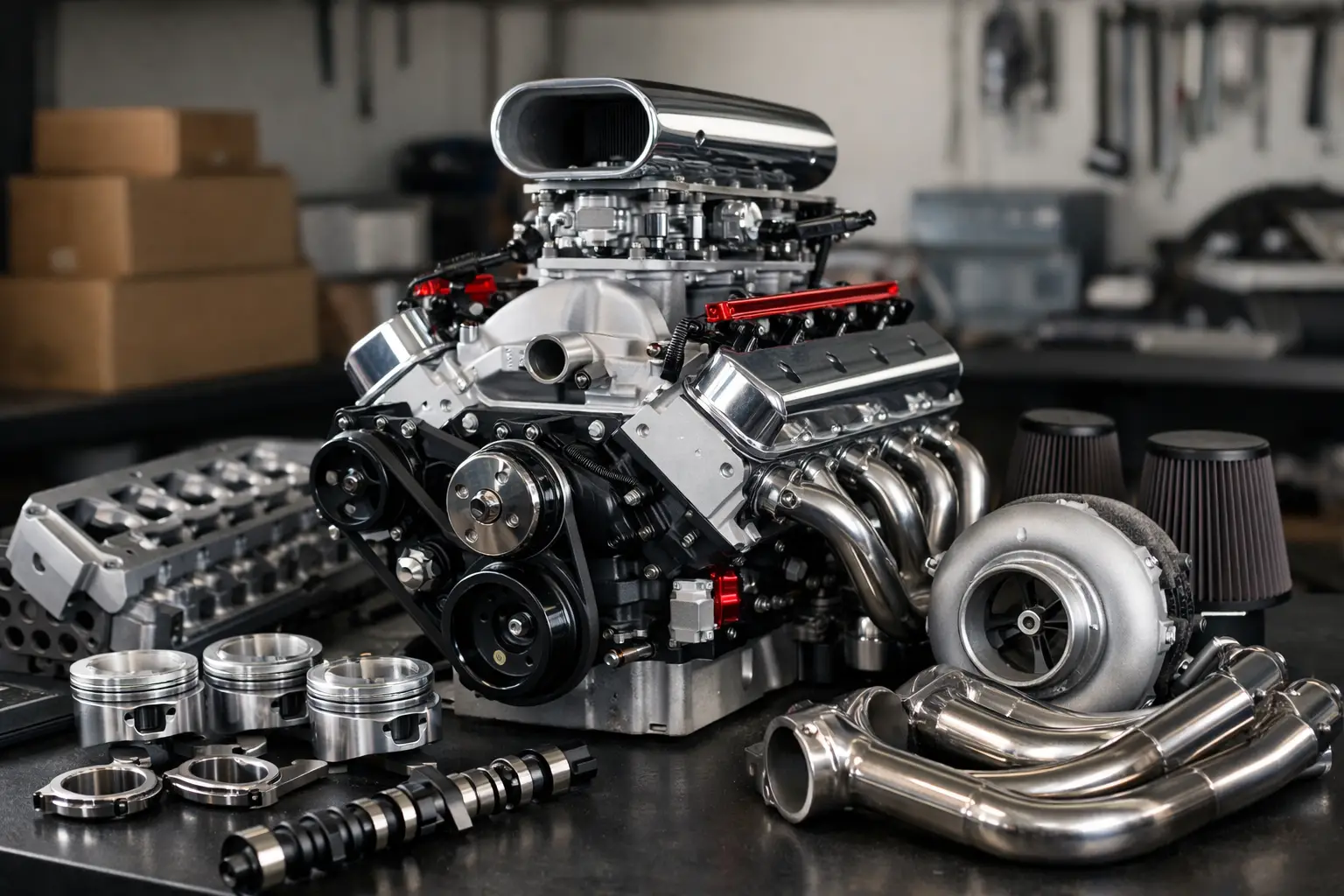
A dead engine can park a truck for weeks. A half-finished swap can eat a build budget one missing part at a time. That is why performance engine package deals make sense for builders, repair shops, and drivers who need real power without chasing an engine, transmission, accessories, and compatible hardware across a dozen listings.
The right package turns a complicated drivetrain search into one clear purchase decision. You get a matched powertrain foundation, a better view of total cost, and a faster path from delivery day to first startup. But not every package is built for the same goal. A low-mile truck replacement, a street LS swap, and a high-horsepower muscle car build each demand a different level of completeness.
Why Performance Engine Package Deals Save Time and Money
Buying an engine by itself can look like the cheaper route. Then the real project begins. You still need to locate the right transmission, confirm torque converter compatibility, track down brackets, source accessories, and make sure the electronics are not a surprise after the engine is already in the shop.
A complete engine and transmission package removes a major layer of guesswork. The engine and transmission were designed or previously used as a pairing, which gives you a stronger starting point for fitment, drivability, and power delivery. For an independent shop, that can mean fewer delays on a customer vehicle. For a DIY builder, it means less time measuring, researching, and ordering parts twice.
The best value is not always the lowest sale price. It is the package that prevents expensive add-on purchases and lost weekends later. A package with a compatible transmission, harness, ECU, accessory drive, and documented mileage may cost more upfront than a bare long block, but it can be the smarter buy when your goal is to get the vehicle moving.
Start With the Job Your Powertrain Must Do
Before comparing displacement, horsepower, or promo pricing, decide what the vehicle needs to accomplish. Replacement and performance are not the same purchase, even when the engines share a platform.
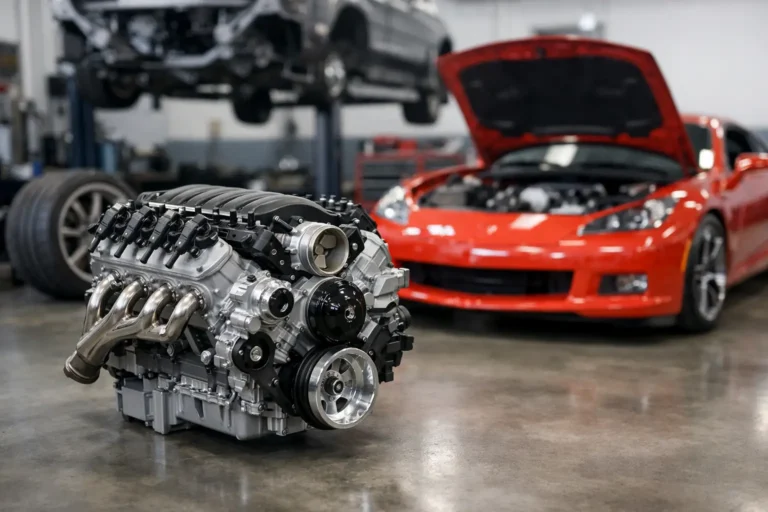
For a factory-style replacement, prioritize the original application, engine code, emissions requirements, sensor locations, oil pan configuration, and transmission match. A lower-mile used engine package can be a strong answer for a daily-driven Silverado, F-150, Ram, BMW, or GM SUV when the goal is dependable transportation without the cost of a new vehicle.
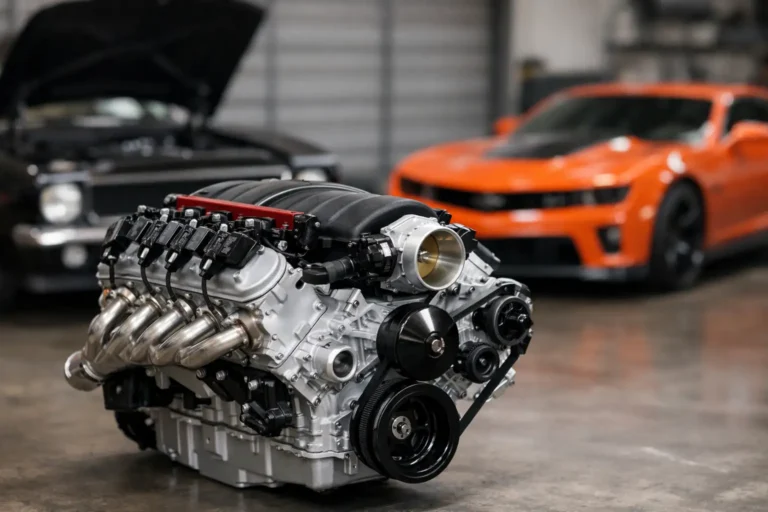
For a swap, the platform matters, but the installation details matter even more. An LS-based engine is popular because of parts availability, compact dimensions, and broad tuning support. Still, an LS package for a classic Chevelle, a square-body truck, or a lightweight street car may need different mounts, pans, exhaust routing, cooling capacity, fuel delivery, and computer controls.
For a performance upgrade, be honest about the power target. A stock 5.3L with the right transmission can make a fun, reliable street build. A higher-output crate engine may be the better move if the project needs immediate horsepower, warranty support, or a clean new-engine starting point. More power can also mean a bigger fuel system, stronger rear end, upgraded brakes, and additional transmission capacity. The package gets power to the ground, but it does not erase the need to build the rest of the vehicle around it.
What a Complete Package Should Include
The word “complete” can mean different things from one listing to another. Never assume that every visible component is included. Read the package description and confirm what ships with the powertrain.
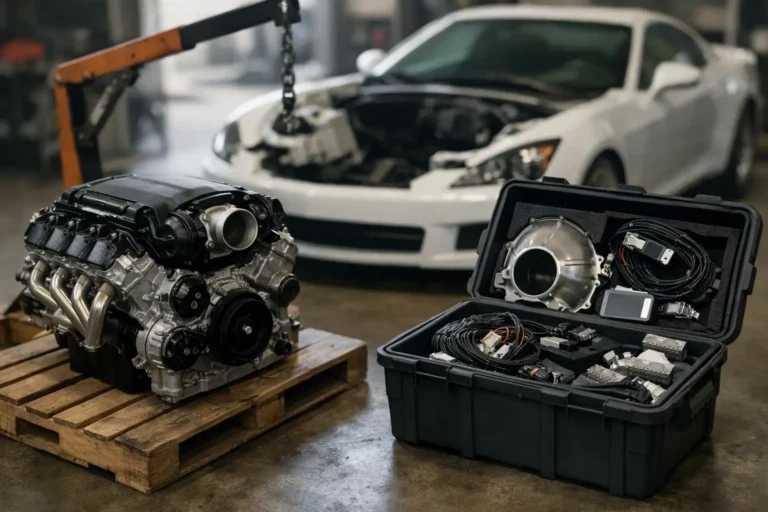
A practical package may include the engine, automatic or manual transmission, torque converter or clutch-related components, wiring harness, ECU, front accessories, intake components, and sensors. A true dropout assembly may also retain factory brackets and other application-specific pieces from the donor vehicle. That can be a major advantage when replacing an engine in the same platform.
Ask direct questions before ordering if the listing does not make these details clear. Confirm whether the transmission is included, whether accessories are installed, whether the harness and computer are supplied, and whether the package requires reprogramming. Also ask about the oil pan, exhaust manifolds, flexplate, starter, and transfer-case compatibility for four-wheel-drive applications.
A package does not have to include everything to be a good deal. Some experienced builders prefer a bare engine and transmission so they can select their own cam, intake, standalone harness, or accessory drive. The key is knowing which parts you are intentionally choosing separately instead of discovering them after the engine arrives.
Fitment Is More Than Engine Size
A 6.0L is not automatically a direct replacement for every 6.0L application. A 5.3L is not automatically plug-and-play just because it came from a GM truck. Engine family, model year, VIN code, drive configuration, sensor setup, and transmission type can all affect whether the package fits your vehicle and your plan.
Start with the vehicle year, make, model, drivetrain, and original engine information. Then compare the donor application. If you are replacing a factory engine, match the original configuration as closely as possible. If you are swapping, identify the parts that must change to make the package work in the new chassis.
Transmission selection deserves the same attention. A 4L60E can be a practical option for a mild street setup, while a 4L80E is often favored for heavier vehicles and higher torque loads. Ford, Dodge/Ram, and BMW applications carry their own transmission and electronics requirements. A deal only stays a deal when the transmission can handle the power and communicate with the vehicle correctly.
Mileage, Condition, and Documentation Matter
Used engine packages are a great way to get factory power at an aggressive price, especially when the listing clearly identifies mileage and donor details. Lower mileage is usually attractive, but mileage alone does not tell the full story. How the engine was maintained, stored, removed, and inspected matters too.
Look for clear application information, mileage disclosure, visible photos, and a straightforward description of what is included. For replacement engines, verify whether the intake, exhaust manifolds, accessories, and electronics transfer from your original setup. For swaps, look for a package that gives you enough factory components to avoid hunting down small but necessary parts.
New and remanufactured engines offer a different kind of value. They can make sense when you want known internal condition, a fresh foundation, or a build that cannot afford the uncertainty of a used assembly. The trade-off is price. If your budget is tight and your project is flexible, a lower-mile used dropout package may leave more room for the supporting upgrades that make the vehicle reliable.
Price the Whole Build, Not Just the Package
The engine package price is only one number. Freight, fluids, mounts, tuning, fuel-system changes, cooling parts, driveshaft work, exhaust fabrication, and installation labor can change the final total fast.
Build a realistic budget before you buy. Include the parts that are likely to be needed, not just the parts you hope to avoid. This is especially critical for custom swaps, where a low-price engine can become costly if the wrong oil pan, electronics, or transmission choice forces a major change in direction.
That does not mean you should avoid a deal. It means you should buy with a plan. Swap Engine Vault is built around the idea that finding the right engine should not require piecing together a drivetrain from scattered sources. A properly matched package can reduce the number of unknowns and keep your build focused on progress.
Choose the Package That Matches Your Finish Line
The best package is the one that fits your vehicle, your power goal, and the amount of fabrication you are ready to take on. A complete, application-matched dropout can be the fastest route for a repair. A flexible LS engine and transmission combination can be the right call for a swap. A new performance package may be worth the premium when horsepower and long-term confidence matter most.
Before checkout, verify the engine code, donor application, mileage, transmission, included components, and shipping details. Then make your move. The right powertrain package does more than fill an engine bay – it gets your truck, car, or customer project back where it belongs: on the road and under power.