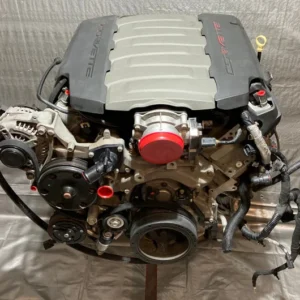
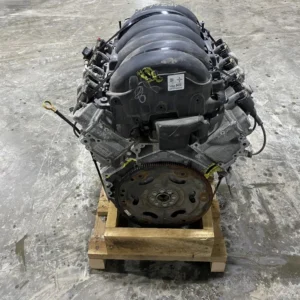
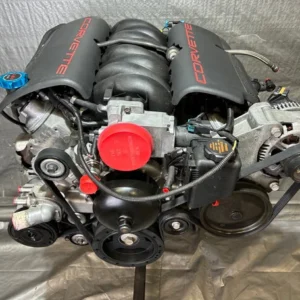
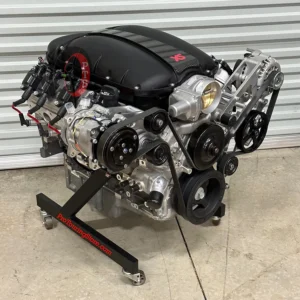
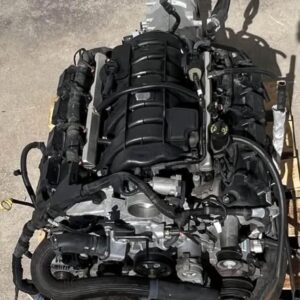
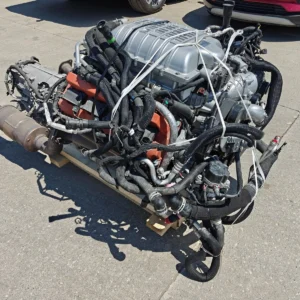
A project can stall fast when the engine is on one pallet, the transmission is somewhere else, and the parts needed to connect them are still a question mark. An engine swap package with transmission puts the core of your drivetrain decision in one place. For a dead daily driver, truck rebuild, LS conversion, or street-performance build, that can mean less time hunting and more time getting the vehicle moving under its own power.
The package is not automatically a bolt-in solution. Fitment, electronics, accessories, transfer case compatibility, and your vehicle’s intended use still matter. But starting with an engine and transmission that were designed to work together gives you a cleaner path than mixing components from different years, applications, and sellers.
Why Buy an Engine Swap Package With Transmission?
The biggest advantage is compatibility at the powertrain level. When an engine comes paired with its matching automatic or manual transmission, you are not guessing whether the bellhousing pattern, flexplate, torque converter, starter arrangement, or transmission tuning will work together. That matters on nearly every build, from a Chevy truck replacement to a late-model Ford upgrade.
A complete pairing can also simplify your budget. Buying an engine first often creates a chain reaction: then you need a transmission, converter, brackets, sensors, wiring, a shifter, and a controller. Some of those parts may still be required with a package, but the major drivetrain pieces are already accounted for. You can plan the rest of the build with real numbers instead of hoping a bargain engine stays a bargain.
For repair shops, the time savings are just as valuable. A customer with a failed engine does not want to wait while the shop tracks down a compatible transmission after discovering the existing unit has damage or excessive mileage. A matched package makes it easier to quote the job, schedule the install, and keep the repair moving.
Start With the Vehicle and the Goal
Do not choose a package only because the horsepower number looks good. Start with the chassis and decide what the vehicle needs to do when it is finished. A work truck, trail rig, classic muscle car, and weekend street build can all use similar engines, but they demand different transmission gearing, cooling capacity, controls, and accessory layouts.
For a replacement, confirm the original vehicle year, make, model, drivetrain, engine code when available, and whether it is two-wheel drive or four-wheel drive. Truck applications deserve extra attention because output shafts, transfer case connections, pan clearance, and transmission length can vary. A two-wheel-drive transmission is not automatically the right choice for a four-wheel-drive truck just because the engine is correct.
For a custom swap, measure before you buy. Record engine bay width, firewall clearance, oil pan clearance, hood height, crossmember location, driveshaft space, and steering shaft position. An LS engine may be compact and popular, but the specific intake, accessory drive, oil pan, and transmission you choose still determine how easily it fits your chassis.
What Should Be Included in the Package?
Package contents vary, so read the listing like the success of your build depends on it. It does. Some engine-transmission assemblies are true dropouts pulled from running vehicles. Others may include the long block and transmission but not the accessories or electronics needed for installation.
A strong package can include the engine, transmission, torque converter on automatic applications, intake, exhaust manifolds, accessory drive components, starter, and select sensors. In some cases, the original wiring harness, engine control module, transmission control module, pedal assembly, shifter, or transfer case may be available. Those extra pieces are not filler. They can save serious troubleshooting time, especially on electronically controlled late-model powertrains.
Before purchasing, clarify the condition and inclusion status of the following key items:
- Engine accessories, including alternator, power steering pump, A/C compressor, brackets, and pulleys
- Engine wiring harness, ECU or PCM, fuse block, sensors, and electronic throttle pedal when required
- Automatic transmission torque converter, transmission harness, cooler lines, and shifter components
- Four-wheel-drive transfer case, if the donor package came from a 4WD application
- Exhaust manifolds, starter, flexplate or flywheel, and oil pan configuration
Not every build needs every item. A carbureted classic may use an aftermarket controller and custom accessories. A modern truck replacement may need the donor electronics to avoid unnecessary programming and wiring work. The right answer depends on whether you are replacing, restoring, or reengineering the vehicle.
Mileage and Condition Matter More Than a Paint Job
A clean-looking engine does not tell the whole story. Mileage, donor vehicle history, compression or inspection information, and the completeness of the assembly are more useful buying signals. Lower-mileage used powertrains can be a smart value for drivers and shops that want original factory engineering without the cost of a new crate setup.
Used does not mean worn out, and remanufactured does not mean every surrounding part is new. Ask what the package includes and what has been inspected, replaced, or tested. If you are building for high horsepower, also consider whether the stock transmission is ready for the torque you plan to make. A factory 4L60E may be a practical match for a mild LS street build, while a heavier truck or boosted setup may call for a stronger transmission choice.
This is where cheap can become expensive. Saving money on the purchase price does not help if the transmission needs a rebuild after installation or if missing electronics force you into a custom wiring project you did not budget for. Buy the package that fits the real scope of the job.
Electronics Can Make or Break the Swap
Modern engines are not just mechanical assemblies. They are systems that rely on computers, sensors, anti-theft programming, drive-by-wire controls, and transmission communication. An engine that starts and runs in its donor vehicle can still become difficult in a new chassis when the correct harness, module, pedal, and calibration are missing.
For late-model GM, Ford, Dodge/Ram, and BMW applications, verify whether the package includes the ECU or PCM and whether it will need reprogramming for your vehicle. If the engine and transmission are electronically paired, keeping their matching control components can reduce compatibility problems. You may still need tuning for deleted vehicle systems, gear changes, tire size, emissions equipment, or performance modifications.
Older builds offer more flexibility, but they can require more fabrication. A standalone harness and controller may be the cleaner route for an LS swap into a classic car. That adds cost up front, yet it can simplify the finished wiring and make future service easier. There is no universal best setup – there is only the setup that matches your budget, skill level, and end goal.
Plan the Parts Around the Package
An engine and transmission are the center of the swap, not the full install. Account for mounts, crossmember work, driveshaft modification, fuel system requirements, cooling, exhaust, gauges, and transmission cooling before the package arrives. If you change transmission length or output style, the driveshaft and yoke may need to change too.
Cooling is one area builders underestimate. More power, towing use, and automatic transmissions all create heat. A quality radiator, proper fan setup, and an adequate transmission cooler protect the investment after the vehicle is back on the road. The same goes for fuel delivery. A fuel-injected engine needs the correct pressure, lines, filtration, and pump capacity. Do not let a weak fuel system hold back a strong drivetrain.
It also pays to decide early what gets replaced while the assembly is out. Rear main seals, oil pan gaskets, spark plugs, belts, water pumps, mounts, and serviceable sensors are usually easier to address before installation. That is not wasted effort. It is the kind of prevention that keeps a finished build from returning to the lift for a small but frustrating leak.
Buy for the Finish Line, Not Just the Checkout Page
An engine-transmission package should make your project easier to finish, not merely easier to purchase. Match the package to the vehicle, confirm every included component, understand the donor application, and budget for the systems around it. That approach is how a replacement becomes dependable and a swap becomes a build you are proud to drive.
At Swap Engine Vault, the smart move is to shop with your vehicle details, intended use, and must-have components ready. A few minutes spent confirming fitment before ordering can save weeks of fabrication, returns, and missed driving time. Get the drivetrain foundation right, then build the rest of the ride around power you can actually use.