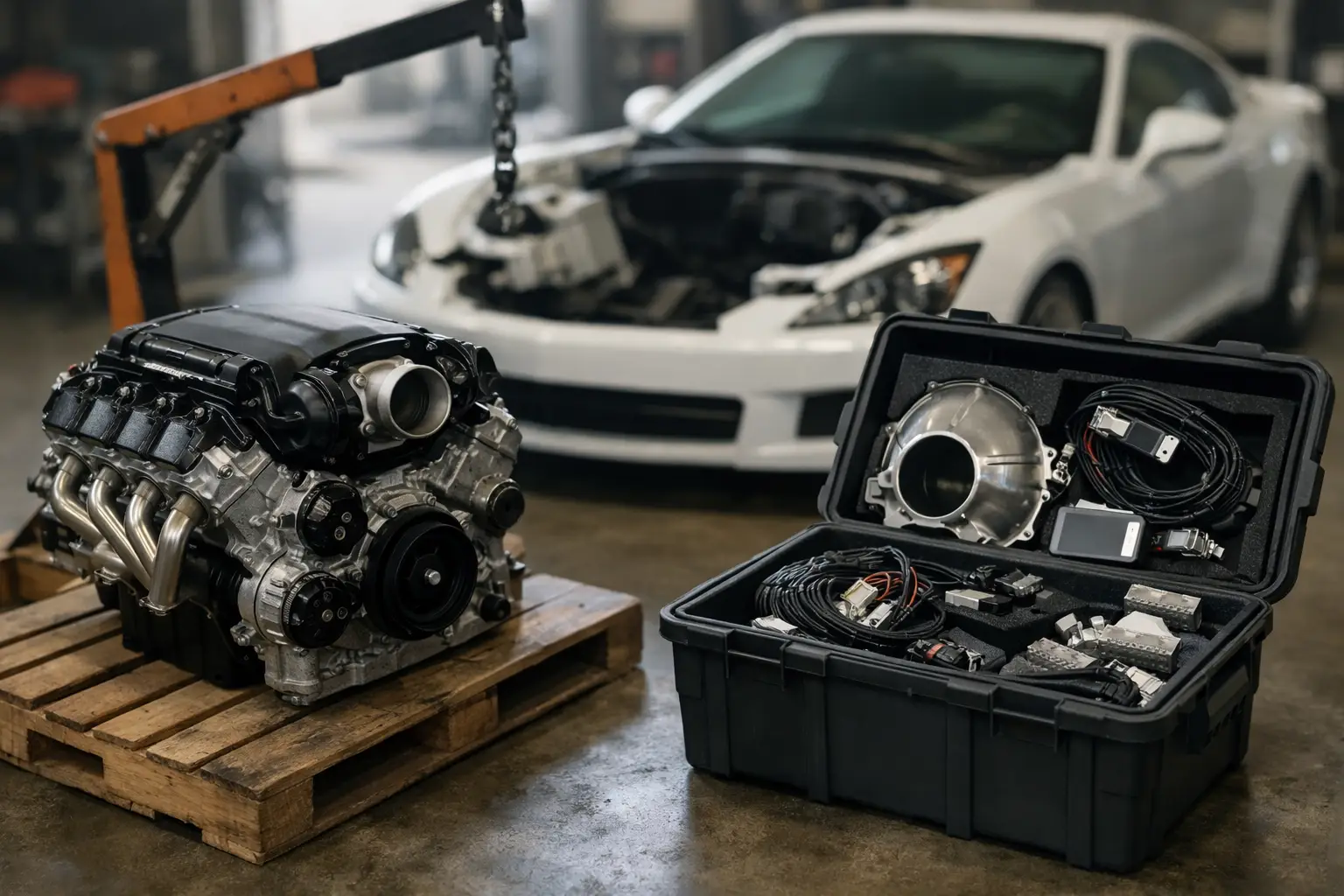
A swap can turn a dead truck into a dependable workhorse, give a classic muscle car modern power, or make a weekend build genuinely fun to drive. But engine swaps go sideways fast when the engine is treated as the only part that matters. The best builds start by matching the powerplant, transmission, electronics, accessories, and vehicle platform before the first order is placed.
That does not mean every project needs a fully custom plan or a race-shop budget. It means buying the right package for the job. A complete dropout or engine-and-transmission combination can remove major guesswork, while a bare engine may make sense when you already have the supporting parts and the time to sort them out.
Start Engine Swaps With a Real Goal
Before comparing LS, Coyote, HEMI, big-block, or BMW power options, decide what the vehicle needs to do. A replacement engine for a daily-driven Silverado has a different target than an LS-powered square-body truck, a Fox-body street build, or a restoration that needs to stay close to original.
Be honest about horsepower, too. More power can mean more heat, more fuel demand, driveline upgrades, stronger brakes, and a transmission that was never part of the original budget. A 450-horsepower package that starts, shifts, and stays cool is usually more satisfying than a 700-horsepower project parked for six months waiting on parts.
Set the goal in plain language: dependable replacement, towing torque, street performance, track use, restoration, or show build. That one decision will point you toward the right engine family and help prevent expensive changes halfway through the project.
Choose the Package, Not Just the Engine
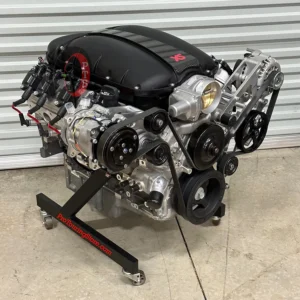
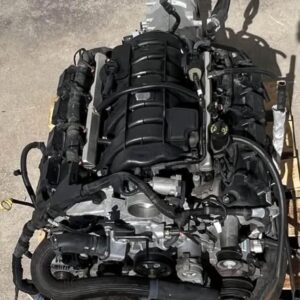
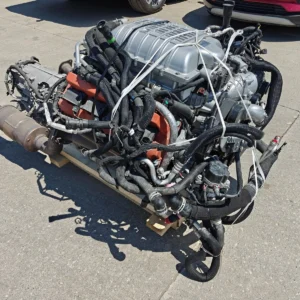
A low-mileage engine can look like a bargain until you add a transmission, torque converter, harness, ECU, accessories, sensors, mounts, and shipping from several different sellers. For many builders and repair shops, a complete engine-transmission package is the faster path forward because the major drivetrain components already belong together.
A complete package is especially valuable when replacing a late-model engine or using a donor-style setup. Keeping the original transmission with its matching engine can reduce compatibility questions around bellhousing patterns, flexplates, torque converters, starter locations, and electronic controls. It also gives you a clearer starting point for mileage and donor application.
That said, a bare engine is not automatically the wrong buy. It can be the smart call if you are retaining a known-good transmission, building an engine around aftermarket components, or replacing the same engine in the same vehicle. The key is knowing exactly what is included. Ask whether the intake, exhaust manifolds, accessories, throttle body, wiring, ECU, transmission, and converter are part of the sale. “Complete” can mean different things across the used-engine market.
Match the Transmission to the Mission
Transmission choice changes how the vehicle feels every time you drive it. An automatic can be ideal for a truck, cruiser, drag-oriented build, or customer repair where easy operation matters. A manual adds engagement but introduces its own list of requirements, including clutch components, flywheel selection, pedal assemblies, hydraulic setup, and possible tunnel clearance work.
Do not assume a transmission that physically bolts to an engine will work electronically or survive the intended power level. A modern electronically controlled automatic may need the correct controller, wiring, programming, shifter strategy, and speed-sensor information. If you want overdrive for highway driving, build that into the plan from day one instead of discovering it after the engine is already installed.
Fitment Is More Than Engine Bay Space
An engine can fit between the fenders and still be wrong for the vehicle. Oil-pan clearance, steering linkage, crossmember location, hood height, accessory drive placement, exhaust routing, and transmission tunnel dimensions all matter. Truck accessories may sit too wide for a tighter car chassis. A rear-sump or front-sump oil pan can determine whether the swap is simple or turns into fabrication work.
Measure the engine bay and check the position of the firewall, steering shaft, front suspension, radiator support, and hood. If you are swapping into a popular platform, proven mounts and crossmembers can save serious time. If the vehicle is less common, expect some fabrication and leave room in the budget for it.
Driveshaft length is another detail that should not wait until the final weekend. Changing engine and transmission length often changes where the transmission output lands. Plan for driveshaft modification or a new shaft, and make sure the rear-end gearing and strength match the package you are installing.
Build Around the Support Systems
The engine runs only as well as the systems feeding and cooling it. A swap-ready plan accounts for fuel delivery, radiator capacity, fan clearance, hoses, exhaust, battery placement, and charging. Carbureted and fuel-injected combinations need very different fuel systems. A late-model EFI engine may require a high-pressure pump, proper fuel lines, a return-style setup depending on the application, and a clean electrical supply.
Wiring deserves special attention. Using the matching engine harness and ECU from a package can make the process more straightforward, but it still has to be integrated into the vehicle. You may need security functions removed, emissions equipment retained, gauges adapted, and the calibration adjusted for tire size, gear ratio, or changed components. Budget for professional tuning when the setup calls for it. Guessing with a tune is not a money-saving move.
Cooling problems also ruin good swaps. Size the radiator and fans for the engine’s heat output, expected climate, and use case. A street truck sitting in summer traffic needs more than a radiator that looks good in a catalog. Make sure there is enough fan-to-engine clearance before finalizing accessory drives and radiator placement.
Know the Real Cost Before You Buy
The purchase price of an engine package is the foundation, not the finish line. A practical budget should leave room for consumables, fluids, filters, mounts, wiring work, fuel-system parts, exhaust fabrication, cooling upgrades, driveshaft work, tuning, and unexpected hardware.
Use this quick buying check before committing to a package:
- Confirm the donor vehicle, engine code, mileage, and exact components included.
- Verify engine, transmission, converter, wiring, ECU, and accessory compatibility.
- Check mounting, oil-pan, steering, hood, and exhaust clearance for your chassis.
- Plan fuel, cooling, driveshaft, rear-end, brake, and electrical upgrades.
- Review local emissions and inspection rules before choosing the setup.
The last point matters. Federal, state, and local rules can affect what engine, emissions equipment, and calibration are legal for a street-driven vehicle. Requirements vary by location and vehicle age, so check them before spending money on parts that may not pass inspection where you live.
Replacement Build or Performance Swap?
A direct replacement is usually about returning a vehicle to service with the least downtime. Fitment, mileage, correct application, and bundled transmission options should lead the decision. This is where a lower-mileage used engine or a remanufactured replacement can make sense, depending on budget and how long you plan to keep the vehicle.
A performance swap is a different kind of purchase. It is not just about the advertised horsepower number. Consider aftermarket support, parts availability, tuning options, weight, serviceability, and how easily the engine family fits your platform. LS engines remain a favorite because parts support is massive and proven swap solutions exist for countless cars and trucks. Ford, Dodge/Ram, Chevy/GM, and BMW packages each bring their own strengths, but none are truly plug-and-play without the right supporting plan.
For a builder who wants less sourcing and fewer compatibility surprises, the complete package often wins. At Swap Engine Vault, that is the advantage of shopping engine and drivetrain options built around how real projects come together, not just how parts look on a listing.
The right swap is the one that starts reliably, fits cleanly, and gets driven. Buy for the whole vehicle, leave room for the systems around the engine, and your project has a far better chance of becoming a finished ride instead of another stalled build.