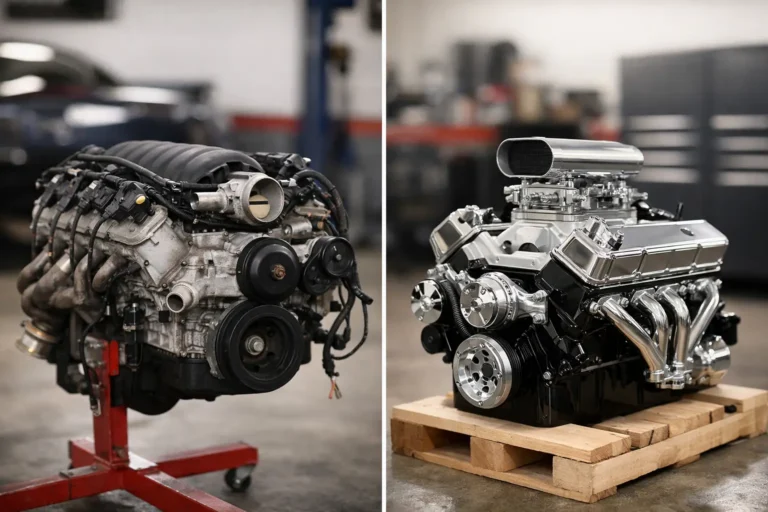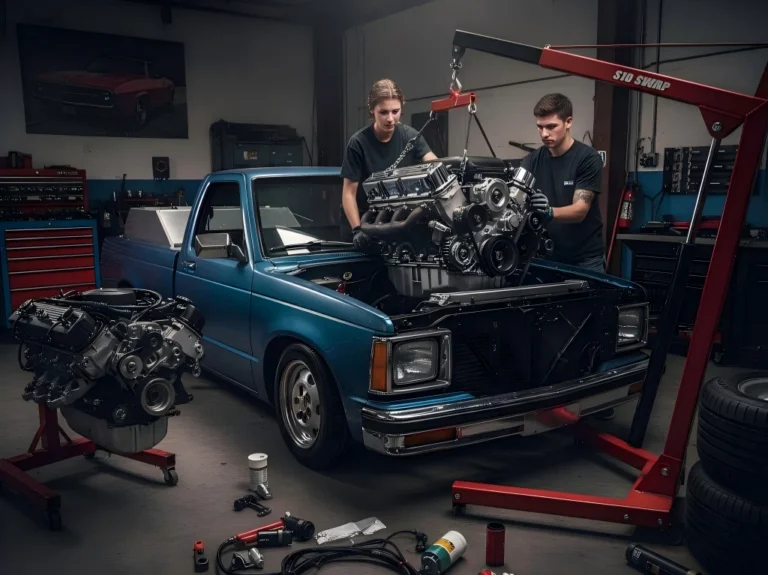
Best LS Swap Engines for 2026: LS1 vs LS2 vs LS3 vs 5.3 vs 6.0
If you are planning an LS engine swap in 2026, you have more choices than ever. The problem is that having more choices can make the decision harder, not easier. Should you buy an LS1 because it is a proven classic? Is the LS2 worth paying more for? Does the LS3 make the most sense if you want serious horsepower? Or should you forget the car engines altogether and grab an inexpensive 5.3L or 6.0L truck engine?
There is no single LS engine that is perfect for every swap. The best engine depends on what you are building, how much you want to spend, how much power you need, what transmission you plan to use, and how much fabrication you are willing to do.
The good news is that all five engines in this comparison come from the same famous small-block Chevrolet family. That means they share a huge aftermarket, compact dimensions, strong performance potential, and an enormous amount of swap knowledge. Chevrolet Performance’s current catalog, for example, lists LS-family engines ranging from 5.3L truck-based engines to 6.2L LS3-based combinations.
So, which is the best LS swap engine for 2026?
For most builders, the answer comes down to three choices: 5.3L for value, 6.0L for strength and power potential, and LS3 for an excellent high-performance package. But the LS1 and LS2 still have situations where they make plenty of sense.
Let’s break down each option.
Why LS Engines Are Still Popular for Swaps
The LS engine became popular because it solves several problems at the same time. It is a small-block V8 that can make serious power without requiring the enormous physical size of many older big-block engines. It has a relatively simple design, strong aftermarket support, and a huge number of engines and parts available from both original-equipment and performance suppliers.
The basic LS architecture has also proven remarkably adaptable. You can find LS-based engines in sports cars, muscle cars, SUVs, and pickup trucks. That matters because a swap builder is not restricted to one expensive donor vehicle. A junkyard 5.3L truck engine, a performance-oriented 6.0L, an LS1 from a Camaro or Corvette, or an LS3-based engine can all become the heart of a completely different vehicle.
The platform also has decades of development behind it. Holley Motor Life’s LS engine guide describes the LS family as one of the most widely used and supported modern small-block V8 platforms. That huge knowledge base is one reason an LS swap can be easier to troubleshoot than a less common engine conversion.
The LS Swap Advantage
Think of an LS swap like building a computer from popular components. You are not starting from zero. Thousands of other people have already figured out engine mounts, oil pans, wiring, fuel systems, cooling systems, exhaust routing, throttle control, accessory drives, and transmission combinations.
That does not mean every LS swap is plug-and-play. It definitely is not. The engine generation, reluctor pattern, intake, accessory arrangement, oil pan, ECU, wiring harness, transmission, vehicle chassis, and emissions requirements can all affect the installation. But compared with many custom engine swaps, the LS ecosystem gives you a tremendous head start.
That is why the right question is not simply, “Which LS makes the most horsepower?” The better question is, “Which LS gives me the power, cost, packaging, and compatibility I need?”
LS Engine Comparison at a Glance

Before getting deep into each engine, it helps to see the basic differences.
LS1 vs LS2 vs LS3 vs 5.3 vs 6.0 Specs
| Engine | Displacement | Typical Configuration | Block | General Strength | Best Use |
|---|---|---|---|---|---|
| LS1 | 5.7L / 346 ci | Gen III | Aluminum | Strong | Classic performance swaps |
| LS2 | 6.0L / 364 ci | Gen IV | Aluminum | Strong | Performance street cars |
| LS3 | 6.2L / 376 ci | Gen IV | Aluminum | Excellent | High-performance swaps |
| 5.3L | 5.3L / 325 ci | Gen III/IV | Iron or aluminum depending on engine | Excellent value | Budget swaps |
| 6.0L | 6.0L / 364 ci | Gen III/IV | Often iron in truck applications | Excellent | High-power budget builds |
The published specifications vary by exact engine, vehicle application, calibration, and version. For example, Chevrolet Performance’s catalog lists the LS1 at 350 hp and 365 lb-ft in one crate-engine configuration, the LS2 at 400 hp and 400 lb-ft, and the LS3 at 430 hp and 425 lb-ft.
That is an important lesson when shopping for a used LS engine: the engine name alone does not tell the entire story. Two engines carrying the same general displacement can have different heads, compression ratios, reluctor systems, camshafts, intake manifolds, accessories, sensors, and electronics.
LS1 Engine for Swaps
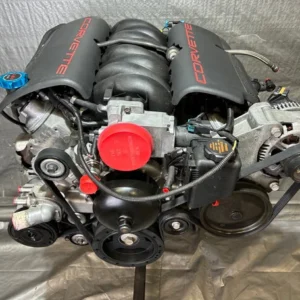
The LS1 is where the modern LS swap story really begins. It debuted in the 1997 Corvette and later became famous in cars such as the Camaro and Firebird. Holley’s technical overview identifies the LS1 as a 5.7-liter, 346-cubic-inch Gen III engine with an aluminum block and a 3.89-inch bore and 3.62-inch stroke.
The LS1’s biggest advantage in 2026 is not that it is the newest engine. It is the opposite. The engine has been around long enough that the aftermarket understands it extremely well. There are countless intake manifolds, camshafts, cylinder heads, headers, oil pans, mounts, wiring solutions, ECU options, and swap components available.
That makes the LS1 attractive if you are building a classic car where authenticity or a traditional LS combination matters. It is also a good choice if you already own an LS1 and want to build around what you have rather than spending money chasing a newer engine.
LS1 Strengths and Weaknesses
The aluminum block keeps weight down, which can be especially useful in a lightweight sports car. A healthy LS1 can also make strong naturally aspirated power while maintaining street-friendly manners.
The downside is availability and price. Because LS1-powered performance cars have become desirable, clean original LS1 engines can command significant money. In some cases, a cheaper 5.3L or 6.0L can provide a better performance-per-dollar starting point.
There is also the age factor. An LS1 you find today may have spent decades on the road. Before buying one, you should verify its condition instead of assuming that the LS1 badge guarantees a perfect engine.
Best LS1 use: classic F-body, Corvette-based projects, lightweight street cars, and builders who specifically want a Gen III aluminum-block LS.
LS2 Engine for Swaps
The LS2 represents a major step forward from the LS1. It is a 6.0-liter, 364-cubic-inch Gen IV engine that debuted for the 2005 model year, including applications such as the Corvette C6, Pontiac GTO, Chevrolet SSR, and other GM performance vehicles.
The extra displacement immediately gives the LS2 an advantage over the LS1. Chevrolet Performance lists an LS2 crate configuration at 400 hp and 400 lb-ft of torque, although factory output varied significantly depending on the vehicle application.
For a swap builder, the LS2 is interesting because it sits in a sweet spot. It has the aluminum block associated with lightweight performance builds, but it has the larger 6.0L displacement associated with more torque and greater potential.
Why Choose an LS2?
If you find a reasonably priced LS2 with good documentation, it can be an excellent engine for a street-performance build. The aluminum block helps keep weight under control, while the 6.0L displacement gives you a stronger foundation than the LS1.
There is one major issue you should understand before buying a used LS2: electronics and reluctor configuration matter. Holley’s technical documentation notes that LS2 engines transitioned from earlier 24x crankshaft reluctor systems to 58x systems, along with changes to camshaft sensing and engine-management hardware.
That means you should not buy an LS2 based only on a photograph and the seller’s description. Find the exact casting, reluctor setup, sensors, ECU requirements, and accessories before planning your swap.
Best LS2 use: lightweight performance cars, street builds, and buyers who want an aluminum 6.0L without moving all the way up to an LS3.
LS3 Engine for Swaps
If someone told you to pick one modern naturally aspirated LS engine for a serious street-performance project, the LS3 would be very difficult to ignore.
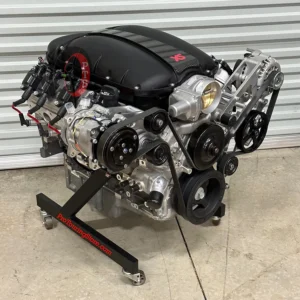
The LS3 is a 6.2-liter Gen IV engine with a 4.065-inch bore and 3.622-inch stroke. Chevrolet Performance lists an LS3 crate configuration at 430 hp and 425 lb-ft of torque.
That is impressive before modifications even begin.
The LS3 also benefits from modern cylinder-head technology and a huge performance ecosystem. For someone who wants a clean, naturally aspirated engine with substantial power potential, it is one of the strongest choices in this comparison.
Why the LS3 Is a Top Choice
The LS3 is essentially what happens when you take the LS formula and turn the performance dial upward. You get more displacement than the LS1 and LS2, modern Gen IV architecture, excellent cylinder heads, and a strong aftermarket.
The problem is simple: price.
A good LS3 usually costs more than a truck 5.3L or 6.0L. If your goal is simply to get an LS-powered car on the road for the least amount of money, spending heavily on an LS3 may not make sense.
But if you are building a high-end muscle car, restomod, track car, or performance street machine, the LS3 can save money elsewhere because you may not need to perform as many upgrades to reach your desired power level.
Best LS3 use: high-performance street cars, restomods, track builds, and buyers who want strong naturally aspirated power from the beginning.
5.3 LS Engine for Swaps
Here is where the LS swap conversation gets interesting.
The 5.3L LS-based truck engine may be the smartest choice for a builder who cares about value. These engines were installed in enormous numbers of GM trucks and SUVs, which helped create a huge supply of affordable used engines.
Chevrolet Performance itself has offered a 5.3L LC9 crate engine rated at 320 hp and 335 lb-ft of torque, describing it as an affordable alternative to a used LS engine and noting its origins in high-volume GM truck applications.
That combination of availability, affordability, and performance is hard to beat.
Why the 5.3 Is the Budget King
A 5.3L does not need to remain a mild truck engine forever. With the right supporting parts, tuning, camshaft, cylinder heads, intake, exhaust, or forced induction, a 5.3L can become a very serious performance engine.
This is why many builders choose the 5.3L and spend the money they saved on the rest of the swap. Instead of putting most of the budget into the engine, you can invest in engine mounts, fuel delivery, cooling, transmission, rear-end upgrades, brakes, suspension, wiring, and tuning.
There are also different 5.3L versions, and that distinction matters. Some are iron-block engines, while others use aluminum blocks. Gen III and Gen IV versions can also have different electronics and features such as displacement-on-demand or variable valve timing.
So “5.3” is a starting point, not a complete engine specification.
Best 5.3 use: budget builds, trucks, street cars, turbo projects, drift cars, and anyone who wants maximum performance per dollar.
6.0 LS Engine for Swaps
If the 5.3L is the budget king, the 6.0L is the muscle option.
The 6.0L family includes several different engines, so you need to pay attention to the exact RPO code and configuration. Truck-based 6.0L engines are especially popular because many use strong iron blocks and provide an excellent foundation for performance builds.
There is also a major difference between a truck 6.0L and an aluminum performance 6.0L such as the LS2. They share displacement, but they are not automatically the same engine.
Chevrolet Performance currently lists a 6.0L LS364/450 configuration using an iron block and LS3 cylinder heads, rated at 452 hp and 441 lb-ft in its long-block configuration.
Iron vs Aluminum 6.0 Engines
An iron 6.0L can be heavier than an aluminum engine, but the weight penalty can be acceptable in a truck or muscle-car build where ultimate front-end weight is less important.
The big attraction is durability and power potential. If you want to add boost later, build a drag car, or simply want a large-displacement LS without paying LS3 prices, a 6.0L can be an excellent foundation.
The 6.0L is also attractive because it sits right at the intersection of affordability and displacement. You get more cubic inches than a 5.3L without necessarily paying the premium associated with an LS3.
Best 6.0 use: turbo builds, high-power street cars, trucks, drag cars, and budget performance projects.
Best LS Engine for Power

If your only objective is making naturally aspirated power with a relatively straightforward build, the LS3 is the obvious winner among these five.
Its 6.2L displacement, factory cylinder heads, and performance-oriented architecture give it a substantial advantage. Chevrolet Performance’s catalog figure of 430 hp and 425 lb-ft is already considerably higher than the catalog figures for the LS1 and LS2 examples listed in the same lineup.
But there is an important twist.
If forced induction is part of your plan, a 6.0L iron-block engine can make more financial sense. You could spend the money saved compared with an LS3 on a turbocharger, fuel system, intercooler, ECU, exhaust, and drivetrain upgrades.
So the answer depends on what “power” means to you.
For naturally aspirated performance, choose LS3.
For affordable boosted performance, look closely at the 6.0L.
For maximum budget efficiency, start with a 5.3L.
Best LS Engine for a Budget Build
The 5.3L wins this category.
That does not mean every 5.3L is cheap. Condition, location, mileage, generation, aluminum versus iron construction, and demand can all affect pricing.
The reason the 5.3L remains such a strong budget choice is that you can often spend less on the engine and more on the swap itself.
And that matters.
A common mistake is to spend the entire budget buying the “best” engine and then discover that the project still needs an oil pan, mounts, wiring, ECU, fuel system, radiator, exhaust, driveshaft modifications, transmission solution, accessories, gauges, and tuning.
The engine is only one part of an LS swap.
A cheap, healthy 5.3L combined with the correct supporting parts can produce a better finished car than an expensive engine installed with a poorly planned swap system.
Best LS Engine for Reliability
Reliability is less about the badge on the valve cover and more about condition, maintenance, parts selection, calibration, and installation quality.
A properly maintained 5.3L can be extremely reliable. A poorly maintained LS3 can fail. The same principle applies to the LS1, LS2, and 6.0L.
When buying a used engine, inspect the oil, compression, leak-down condition, cooling passages, cylinder walls, crankshaft condition, bearings, sensors, and overall history when possible.
You should also avoid assuming that a low-mileage engine is automatically perfect. An engine that sat for years can have its own problems.
The best LS engine for reliability is therefore the best-documented, healthiest engine that fits your project, not necessarily the engine with the highest factory horsepower number.
Best LS Engine for a Daily Driver
For a daily driver, the answer becomes more balanced.
A 5.3L is hard to beat if you want reasonable power, affordability, and a huge supply of replacement parts.
An LS1 can also make a great daily-driver engine if you already have one and your swap is designed around it.
The LS3 is excellent when budget is less important and performance matters more.
But there is another consideration: engine management.
The newest engine is not automatically the easiest engine to swap into an older car. Modern electronics can introduce additional wiring, ECU, throttle-control, sensor, emissions, and transmission considerations.
The best daily-driver swap is the one you can make operate like a complete factory system. Smooth idle, correct fueling, proper cooling, stable charging voltage, working accessories, good transmission control, and a clean tune matter more than winning a dyno comparison.
LS Swap Cost Factors
The cost of an LS swap extends far beyond the engine purchase.
Your total budget can include:
Engine
Engine mounts
Oil pan
Headers or exhaust
Wiring harness
ECU
Tuning
Fuel pump and fuel lines
Radiator
Cooling fans
Intake system
Accessory drive
Transmission
Transmission controller where required
Driveshaft
Clutch or torque converter
Fuel injectors
Gauges
Power steering components
Air conditioning components
Differential and rear axle upgrades
This is why comparing engines solely by purchase price can be misleading.
Imagine two engines. Engine A costs $3,000 and requires several expensive modifications. Engine B costs $4,500 but already includes the accessories, intake, injectors, harness, ECU, and other components you need. The cheaper engine may actually become the more expensive swap.
The smartest buyer calculates the total installed cost, not just the engine price.
What You Need for an LS Swap
Before buying any LS engine, write down your entire combination.
Start with the vehicle.
Then decide on your transmission.
Then decide how much horsepower you want.
Then select the engine.
This approach prevents one of the most common LS swap mistakes: buying an engine first and trying to make everything else work afterward.
You should know whether the engine is Gen III or Gen IV, whether it uses a 24x or 58x reluctor system, whether it has VVT or cylinder deactivation, which intake and accessory system it uses, and what ECU and wiring strategy you intend to run.
You also need to consider the oil pan because the engine may physically fit while the oil pan does not clear the crossmember.
That is the difference between an LS swap that feels straightforward and one that turns into a six-month headache.
Gen III vs Gen IV LS Engines
The Gen III versus Gen IV question is one of the most important things to understand before buying an LS.
The LS1 is a classic Gen III engine, while the LS2 and LS3 are Gen IV designs. The 5.3L and 6.0L categories can include both generations depending on the exact engine.
Gen IV engines introduced several changes, including updated electronics and provisions for technologies such as variable valve timing and cylinder deactivation on certain applications.
That does not make Gen IV automatically better for every swap.
If your project already uses a Gen III ECU and wiring system, a Gen III engine may simplify the installation. If you are starting from scratch and want modern engine-management options, Gen IV may be more attractive.
The key is compatibility.
Do not buy an LS engine until you know which electronics and reluctor system you are buying.
LS Swap Transmission Compatibility
Your transmission deserves almost as much attention as the engine.
A powerful LS paired with an unsuitable transmission is like putting racing tires on a car with worn-out brakes. Something is missing from the combination.
Manual transmissions can be excellent choices for performance swaps, while automatic transmissions can provide excellent street manners and consistent acceleration. The correct choice depends on the vehicle, power target, intended use, and budget.
You also need to consider bellhousing compatibility, flexplate or flywheel requirements, torque converter selection, transmission control, crossmember location, driveshaft length, and rear-axle strength.
The engine and transmission should therefore be planned as one system.
For example, if you are building a 500-horsepower street car, do not choose your transmission based solely on what happens to be sitting beside the engine in a junkyard. Think about torque capacity, gear ratios, availability of parts, electronics, and future power increases.
Which LS Engine Should You Buy in 2026?
So, after comparing the LS1 vs LS2 vs LS3 vs 5.3 vs 6.0, which one should you actually buy?
If you want the simplest answer, use this guide.
Choose the LS1 if you specifically want a Gen III aluminum 5.7L and find a healthy engine at a sensible price.
Choose the LS2 if you want an aluminum 6.0L Gen IV engine and value the combination of weight, displacement, and performance.
Choose the LS3 if you want a premium naturally aspirated performance engine and your budget allows it.
Choose the 5.3L if your biggest priority is getting excellent performance without spending a fortune.
Choose the 6.0L if you want a larger-displacement foundation with serious performance potential, especially for a high-power or boosted build.
For the average 2026 LS swap, the 5.3L and 6.0L deserve the closest look because they offer an attractive balance between purchase cost and performance potential.
If your budget is larger and you want a powerful naturally aspirated engine right out of the box, the LS3 is arguably the best all-around performance choice.
The most important thing is not choosing the engine with the biggest number.
It is choosing the engine that fits the entire build.
Conclusion
The LS platform remains one of the best choices for engine swaps because it gives builders an unusual combination of compact size, V8 power, aftermarket support, affordability, and flexibility.
The LS1 is the proven classic. The LS2 brings 6.0L displacement into an aluminum Gen IV package. The LS3 pushes naturally aspirated performance further with 6.2L displacement and strong factory output. The 5.3L remains one of the smartest budget choices because of its huge supply and excellent upgrade potential. The 6.0L sits between affordability and serious power, making it especially attractive for high-performance and boosted builds.
There is no universal winner.
For budget: 5.3L.
For naturally aspirated performance: LS3.
For budget high-power builds: 6.0L.
For lightweight Gen III projects: LS1.
For aluminum 6.0L Gen IV performance: LS2.
Before buying anything, verify the exact engine code, generation, reluctor pattern, cylinder heads, block material, accessories, intake, ECU requirements, and condition. Those details can make the difference between a straightforward LS swap and an expensive project filled with unexpected parts.
The smartest LS swap in 2026 is not necessarily the most expensive one. It is the combination that gives you the power you need, the reliability you want, and enough budget left over to finish the entire car properly.
Frequently Asked Questions
1. What is the best LS engine for a swap in 2026?
For most budget-conscious builders, the 5.3L is one of the best choices because it offers excellent value and a huge supply of engines and parts. For naturally aspirated performance, the LS3 is the stronger choice. A 6.0L is particularly attractive for builders who want a strong foundation for high-power or boosted applications.
2. Is an LS3 better than an LS1?
For outright factory performance, the LS3 generally has the advantage. Chevrolet Performance lists an LS3 crate configuration at 430 hp and 425 lb-ft compared with 350 hp and 365 lb-ft for the LS1 crate configuration listed in its catalog. However, an LS1 can still be the better choice for a lightweight project, a Gen III-specific build, or a buyer who already owns a good LS1.
3. Is a 5.3 LS good for an engine swap?
Yes. The 5.3L is one of the most popular LS swap engines because it was used in large numbers of GM trucks and SUVs. Its affordability and strong aftermarket make it an excellent starting point for everything from budget street cars to turbocharged builds.
4. Is a 6.0 LS better than a 5.3 LS?
Not automatically. The 6.0L gives you more displacement, which can provide an advantage for torque and power potential. However, the 5.3L can be significantly cheaper, and the money saved can be used for upgrades. For a budget build, the 5.3L can therefore be the better overall choice.
5. What should I check before buying a used LS engine?
Check the exact engine code, generation, mileage, compression, oil condition, block material, cylinder heads, reluctor pattern, sensors, accessories, intake, ECU requirements, and overall condition. Do not purchase a used LS engine based only on its advertised displacement. A “6.0L” or “5.3L” description does not tell you everything you need to know about the engine.