
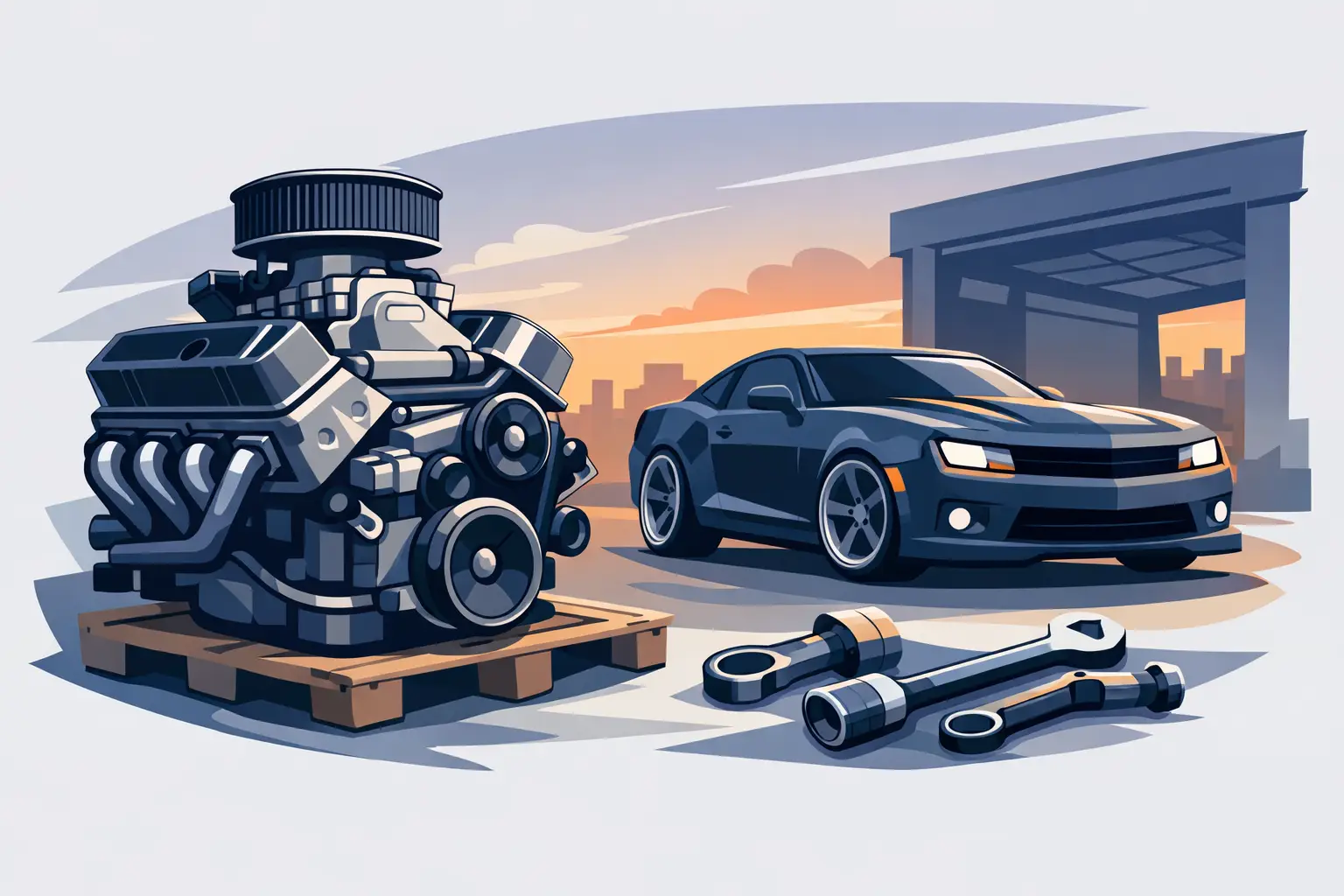
A street car engine has to do more than make a big dyno number. It needs to start clean, idle without drama, fit under the hood, work with the transmission you plan to run, and stay enjoyable when traffic is crawling. The best crate engine for street car builds is the one that matches your vehicle, your budget, and how you actually drive it – not simply the one with the biggest horsepower number on the spec sheet.
That distinction saves money. A 700-horsepower package may sound perfect until it needs a stronger rear end, a bigger fuel system, upgraded brakes, custom cooling, and constant tuning attention. For many builds, 400 to 550 dependable horsepower with a complete, compatible drivetrain is faster to finish and more fun to drive.
What Makes a Crate Engine Street-Car Ready?
Street-ready power is predictable power. You want broad torque, a manageable idle, reliable cold starts, decent accessory compatibility, and parts that can be serviced without turning every repair into a custom-order project. Modern EFI crate engines excel here because they deliver power without the carburetor tuning and temperature sensitivity that can frustrate a daily-driven classic.
Fitment is the other half of the equation. An engine can be a great value and still be wrong for your project if the oil pan hits the crossmember, the headers fight the steering shaft, or the transmission requires major tunnel work. Before choosing any crate engine, confirm the physical dimensions, engine mounts, accessory drive placement, oil pan configuration, ECU needs, and transmission bolt pattern.
A complete engine-and-transmission package can simplify this process. Pairing the engine with a matched automatic or manual transmission reduces compatibility guesswork and helps keep the project moving. It also makes sense for swaps where the original drivetrain is missing, damaged, or not capable of supporting the new power level.
Best Crate Engine for Street Car Builds: Top Choices
There is no single winner for every chassis. The right engine depends on whether you are building a classic Chevy, a Fox-body Ford, a modern muscle car, a truck-based cruiser, or a custom swap. These are the powerplants that consistently make strong street choices.
LS3 and 6.2L LS-Based Engines
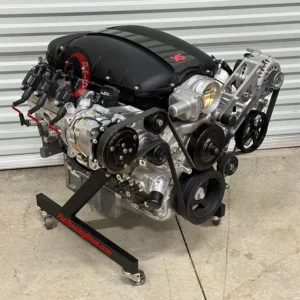
For many builders, the LS3-style 6.2L V8 is the sweet spot. It offers serious naturally aspirated power, excellent aftermarket support, compact packaging compared with many older V8s, and strong parts availability. In a lightweight classic, roughly 430 to 500 horsepower is enough to make the car feel completely transformed without crossing into race-car behavior.
LS-based engines are especially attractive because swap support is everywhere. Mounts, headers, oil pans, wiring solutions, accessory drives, fuel-system components, and transmission adapters are widely available for GM platforms and many non-GM vehicles. A 6L80 or 4L65E automatic pairing can make an LS street car easy to drive, while a T56 manual keeps the experience more involved.
The trade-off is popularity. LS swaps are common, and a poorly planned one can become expensive when buyers chase low entry pricing but forget the cost of electronics, cooling, exhaust, fuel delivery, and driveline upgrades. Buy the most complete package that fits your plan.
5.0L Coyote V8
The Ford Coyote is a high-revving, modern answer for builders who want strong horsepower with factory-like drivability. A naturally aspirated 5.0L Coyote brings impressive top-end pull, electronic throttle control, modern EFI, and a sound that fits Mustang, restomod, and custom Ford projects perfectly.
This is a standout choice for later-model Mustang replacements, SN95 and Fox-body upgrades, and Ford-powered street builds where keeping the blue-oval identity matters. It also works well for drivers who want an engine that feels modern at highway speed and stays happy on longer trips.
Coyote swaps demand planning. The engine is physically wider than traditional small-block Fords, and electronics, front accessory placement, and exhaust routing can add complexity. It is not always the cheapest swap, but it delivers a driving experience that feels worth the effort when installed correctly.
Gen III Hemi and 392 Hemi Packages
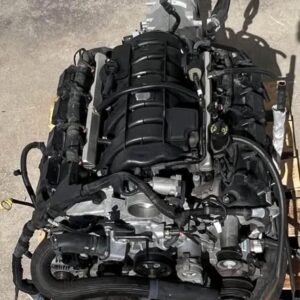
If your street car needs big-inch Mopar personality, the Gen III Hemi platform is hard to ignore. A 5.7L Hemi is a practical choice for a dependable cruiser with strong torque, while a 6.4L 392 delivers the kind of power that gives a Charger, Challenger, Dart, or classic Mopar serious street authority.
The 392 is ideal for buyers who want naturally aspirated muscle without relying on a supercharger or turbo system. It has the displacement, torque, and sound to make a heavy street car feel alive. Matched transmission packages are particularly valuable here because modern Hemi electronics and transmission controls need to work together cleanly.
The catch is that Hemi swaps can require more wiring and integration work than an older carbureted V8 build. For the right owner, that is a fair trade for modern power and factory-caliber manners. For a simple budget project, a more established LS or small-block Chevy route may be easier.
Small-Block Chevy 350 and 383 Stroker
Not every street car needs a late-model ECU. A traditional small-block Chevy remains one of the best values for classic Chevelles, Novas, C10s, Camaros, and hot rods. The 350 is affordable, familiar, compact, and supported by decades of aftermarket parts. A 383 stroker adds displacement and low-end torque without radically changing the formula.
This is the right direction for builders who want straightforward installation, a period-correct appearance, and easy serviceability. A well-built 350 or 383 paired with a TH350, TH400, 700R4, or manual transmission can create a satisfying street package with fewer electronic requirements.
Expect compromises in fuel economy, cold-start refinement, and tuning precision compared with modern EFI engines. Those compromises matter less in a weekend cruiser than in a vehicle that sees daily commuting or long highway miles.
Match Power to the Rest of the Car
An engine choice should start with the car’s traction, chassis, brakes, rear axle, and intended use. More power always puts more pressure on every other system. A 450-horsepower engine in a sorted street car can deliver a better real-world experience than a 650-horsepower engine in a chassis with weak brakes and narrow tires.
Use these four questions before committing to a package:
- How often will the car be driven in traffic, heat, rain, and on the highway?
- Will the current transmission, driveshaft, rear end, and fuel system support the engine?
- Is the goal a clean replacement, a reliable cruiser, or an all-out street-performance build?
- How much of the budget remains for installation parts, tuning, cooling, exhaust, and suspension work?
The answers narrow the field fast. A daily-driven restomod may benefit most from an EFI LS3 or Coyote. A classic muscle car that needs easy torque and simple repairs may be better served by a 383. A Mopar build that needs modern brute force may justify a 392 package.
Do Not Buy the Engine Alone if the Swap Needs More
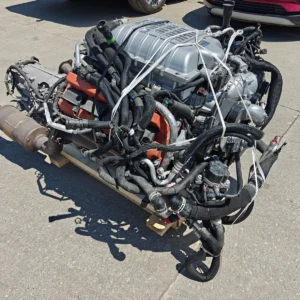
An engine long block is only one piece of the purchase. Depending on the package, you may also need an intake, throttle body, injectors, fuel rails, accessory drive, wiring harness, ECU, sensors, starter, flexplate or flywheel, exhaust manifolds, oil pan, and transmission controller. Missing one key component can delay a project for weeks.
That is why complete dropouts and engine-transmission packages are worth a close look. For replacement jobs and swaps alike, a bundled package gives you a clearer path from purchase to installation. Swap Engine Vault focuses on complete drivetrain options because builders should spend less time hunting mismatched components and more time getting the car back on the road.
Mileage and condition matter as much as the engine family. A lower-mileage OEM pullout can be a smart value when it includes the correct accessories and transmission. A new crate engine may offer more certainty and a cleaner starting point. Remanufactured engines can make sense for stock replacement or moderate performance builds. There is no universal answer – buy based on the level of risk, labor, and downtime your project can handle.
Build for the Drive You Want
A street car should make you look for excuses to take the long way home. Choose an engine that starts easily, delivers torque where you use it, and leaves enough budget to finish the brakes, cooling, tires, and transmission the right way. The best build is not the one that stays on jack stands waiting for one more part. It is the one you can fire up, shift into gear, and enjoy this season.


One Comment