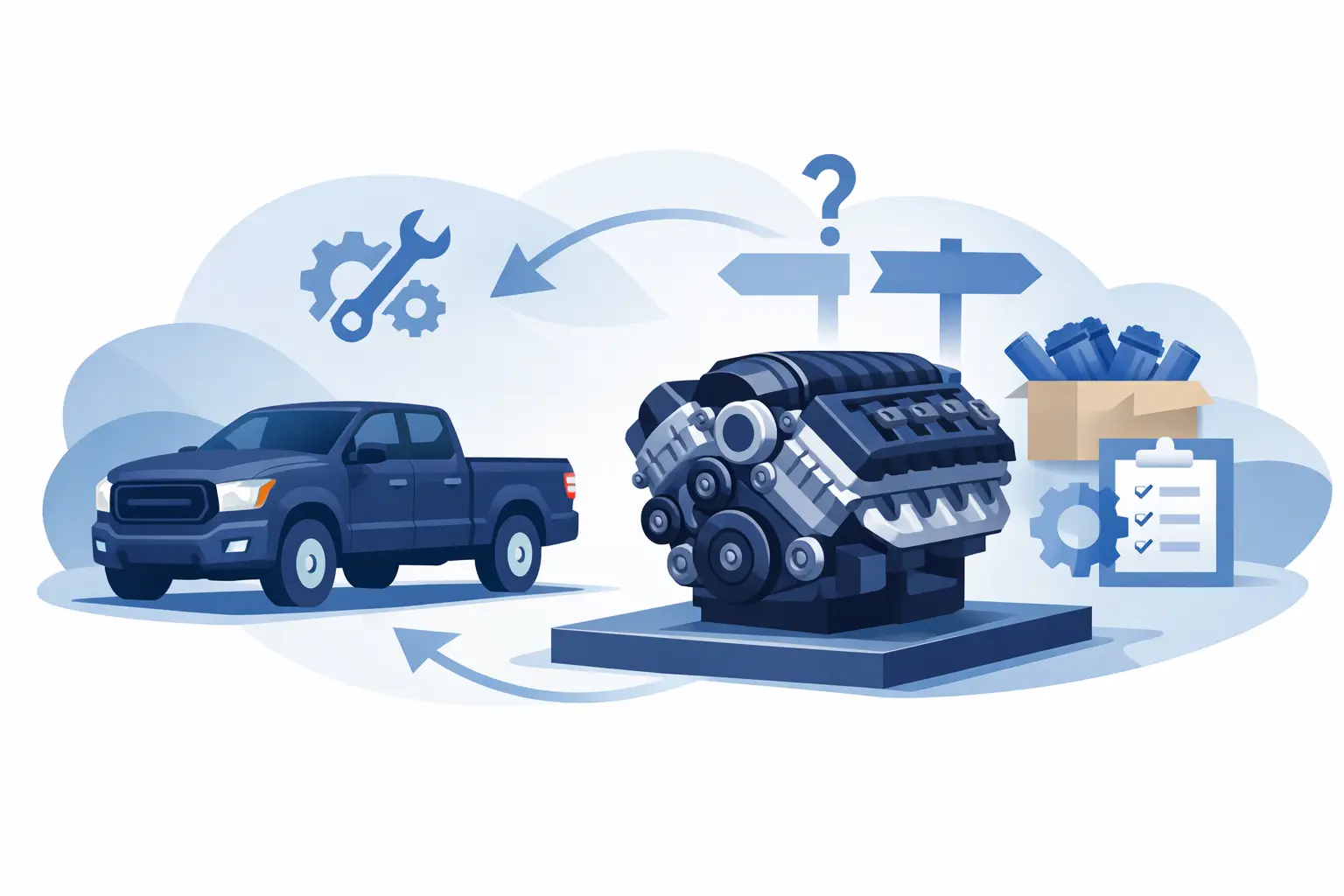
A blown engine can park an F-150 fast, but buying the first available replacement can create a second problem just as quickly. The right F150 engine replacement package is not simply about finding the same displacement. It is about matching the truck’s model year, VIN details, electronics, drivetrain, and the level of completeness your repair actually needs.
For a work truck, daily driver, tow rig, or weekend build, a complete package can cut down the time spent chasing sensors, brackets, harnesses, and transmission parts from separate sellers. That is the advantage of shopping powertrain assemblies instead of trying to build a replacement setup one unknown component at a time.
Start With Your F-150’s Exact Configuration
“F-150 engine” covers a huge range of powertrains. A 5.0L Coyote V8, 3.5L EcoBoost, 2.7L EcoBoost, 3.3L V6, 3.7L V6, 4.6L, 5.4L, and older 4.2L all have different fitment requirements. Even two engines with the same basic name may not be interchangeable without extra work.
Before comparing packages, confirm the model year, engine code, VIN, drivetrain, transmission, and emissions configuration. The VIN is especially valuable because it helps identify the original engine application and equipment. If your truck is four-wheel drive, verify that the package and transmission work with your transfer case setup. If it is two-wheel drive, do not assume a four-wheel-drive transmission will drop in without changes.
The goal is simple: get as close as possible to the original configuration unless you are intentionally planning an upgrade or swap. A close match makes installation faster, reduces programming surprises, and helps preserve factory drivability.
Why Model Year Matters More Than Most Buyers Expect
Ford changed engine controls, sensors, accessory drives, exhaust components, fuel systems, and transmission pairings over multiple F-150 generations. A late-model EcoBoost engine may look similar to another unit in photos, yet use different electronics or calibration requirements. Older Triton applications can have their own variation in intake, ignition, and accessory components.
That does not mean a different-year engine is automatically off the table. It means you need a clear plan for what will transfer from your existing truck. In some cases, keeping your original wiring harness, intake pieces, accessories, and computer-related components is the cleanest path. In others, a matched engine-and-transmission package gives you a more complete starting point.
What Should an F150 Engine Replacement Package Include?
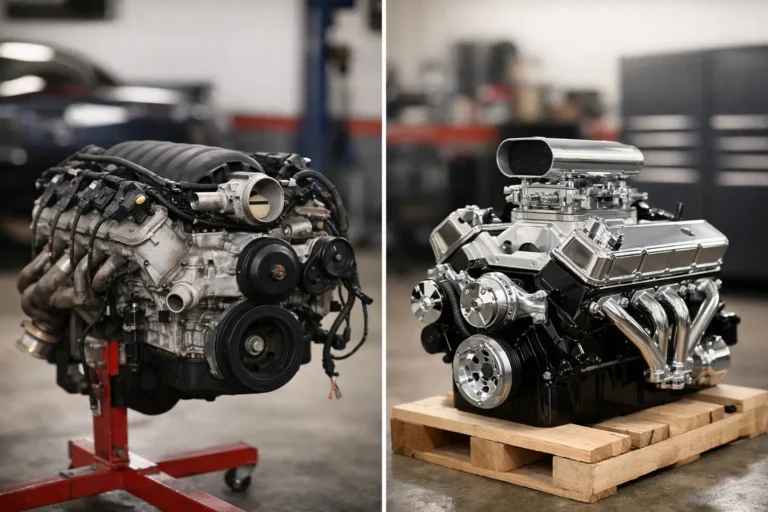
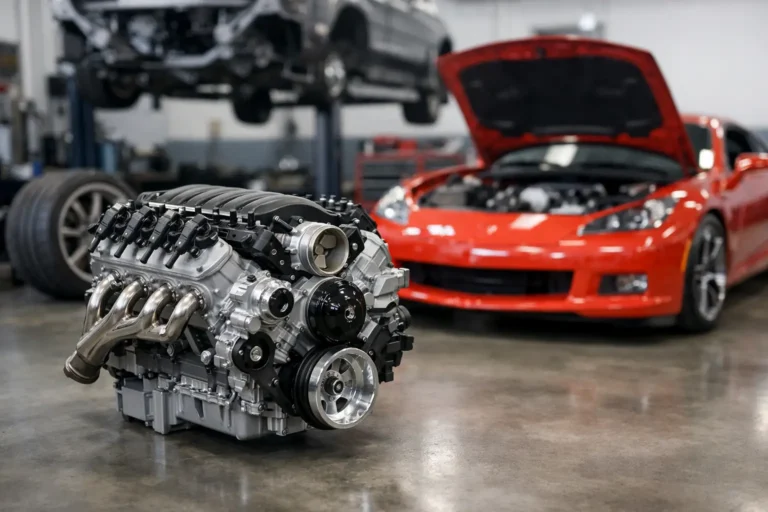
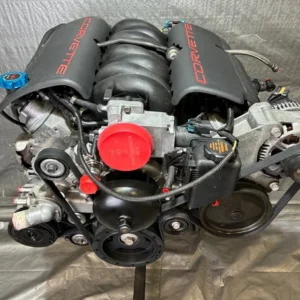
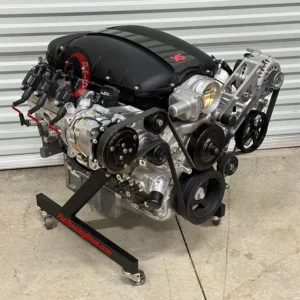
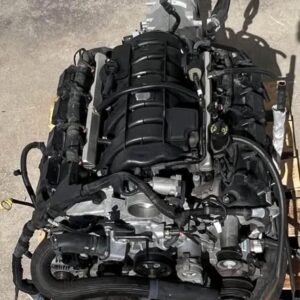
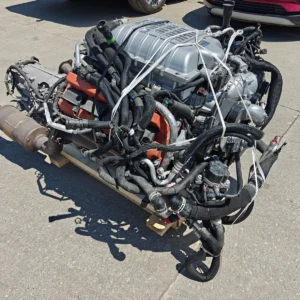
Package descriptions matter. One seller’s “complete engine” may be a long block, while another package may include accessories, intake components, wiring, and a transmission. Never assume the photos tell the whole story.
A basic long block generally includes the engine’s major internal assembly, but it may not include components needed to install and run it. A more complete pullout or dropout assembly can include the engine, transmission, intake, exhaust manifolds, alternator, starter, A/C compressor, wiring, control modules, and other take-off parts. The exact contents vary, so confirm what is included before you build your budget around it.
For many F-150 owners, the smart middle ground is an engine package that includes the engine with the accessories and components most likely to slow down the job. For shops and builders replacing a damaged engine and transmission together, a matched powertrain package can be the better value. It eliminates guesswork around bellhousing compatibility, converter pairing, and transmission condition.
Engine Only vs. Engine and Transmission
Replacing only the engine makes sense when your transmission is known to be healthy, your existing accessories are usable, and you are matching the original engine closely. It can keep the purchase price lower and let you retain parts you already trust.
An engine-and-transmission package is often the stronger move when the truck has high miles, suffered a major failure, or has unknown drivetrain history. If metal contamination, overheating, or a severe impact damaged more than the engine, reusing every old component can be a gamble. A complete matched package can also speed up a project where downtime costs money.
There is a trade-off. A more complete assembly costs more upfront and may require additional freight planning, labor, or programming. But the cheapest engine is not always the lowest-cost repair once you add missing parts, separate shipping charges, and days spent tracking down mismatched components.
Mileage, Condition, and Documentation Drive Value
Lower mileage is attractive, but mileage alone does not tell the full story. A lower-mile used engine with clear application information and a complete package is usually easier to plan around than a mystery engine with vague details. Ask about the donor vehicle application, stated mileage, visible damage, and whether the package was removed as a running assembly.
For used F-150 engines, condition should be evaluated in the context of your goal. A contractor who needs a dependable replacement for a fleet truck may prioritize a straightforward, stock-compatible engine. An enthusiast building a tow-ready or performance-focused truck may prioritize the right platform, accessory configuration, and transmission pairing over simply getting the lowest mileage number.
Also factor in the parts you should replace while the engine is out. New fluids, filters, belts, hoses, plugs where accessible, seals, gaskets, and motor mounts can save a painful amount of labor later. Turbocharged applications deserve extra attention to oil supply and return lines, charge-air plumbing, cooling-system condition, and any signs of contamination from the original failure.
Do Not Ignore Electronics and Programming
Modern F-150 replacements are mechanical and electronic jobs. The engine control module, body modules, anti-theft system, sensors, wiring harnesses, and calibration all need to agree with the installed powertrain. That is particularly true with EcoBoost engines and newer transmission-equipped packages.
A package that includes electronics may be useful, but it is not a promise that every module can be plugged in without configuration work. Your installer should determine whether to retain your original modules, transfer specific sensors and harnesses, or program the truck for the replacement assembly. This is where buying based on exact fitment details pays off.
If emissions compliance applies where the truck will be registered, retain and correctly install the required emissions equipment. Removing or bypassing emissions controls is not a shortcut worth taking. It can create inspection problems, warning lights, poor drivability, and unnecessary expense.
Build a Real Budget Before You Buy
The package price is the headline number, but installation depends on the full parts plan. Freight, core handling if applicable, shop labor, fluids, replacement hardware, programming, and wear items all belong in the estimate. A truck that needs a replacement engine after an oiling or cooling failure may also need radiator, cooler, line, or intake-system service before the new powertrain goes in.
This is exactly why complete packages are popular with independent shops and serious DIY builders. They make more of the cost visible at the beginning. Rather than buying an engine, then discovering you need a different transmission, missing brackets, a converter, or a damaged harness, you can choose an assembly built around the repair scope.
At Swap Engine Vault, the focus is on helping buyers source engine and engine-transmission packages without turning one repair into a dozen separate searches. The best package is the one that fits the truck, fits the project, and arrives with a clear understanding of what still needs to be transferred or replaced.
Questions to Ask Before Ordering
Ask the seller to confirm the donor application, engine code, stated mileage, and package contents. Verify whether the transmission is included and whether it is matched to the engine. Confirm if accessories, intake components, wiring, control modules, torque converter, and flexplate are part of the sale or must be reused from your truck.
You should also ask what is visibly excluded. A/C compressors, alternators, exhaust manifolds, turbos, transfer cases, and wiring are commonly treated differently from one package to the next. Clear answers protect your schedule and keep your installer from getting stuck with a truck occupying a bay while a small but critical part is sourced.
Make the Replacement Work the First Time
An F-150 can be back on the road with the right powertrain plan, but fitment discipline is what keeps the job moving. Match the configuration, know the package contents, budget for supporting parts, and bring your installer into the decision before the engine is ordered.
A little verification now can mean the difference between a truck that is running next week and a project that waits months for one overlooked connector, bracket, or calibration detail.