
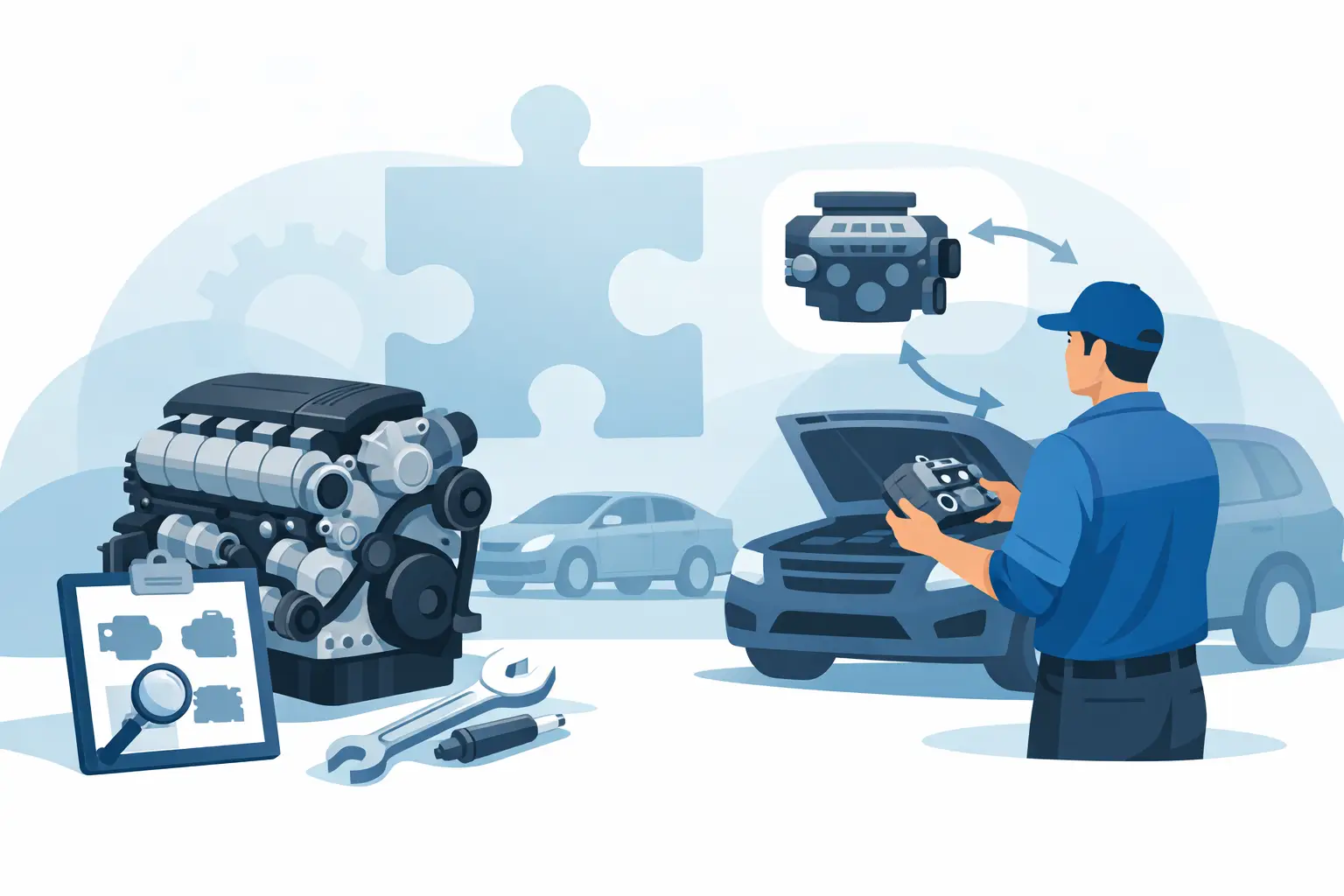
A replacement engine can get your truck, daily driver, or project back on the road fast – or create months of expensive fitment problems. Knowing how to choose a replacement engine starts before you compare prices. The right powertrain has to match your vehicle’s physical layout, electronics, transmission, intended use, and budget.
A cheap long block that will not communicate with your factory harness is not a deal. Neither is a low-mile engine that needs a pile of missing accessories, modules, and brackets before it can run. Buy the package that fits the job, not just the listing with the biggest discount.
Start With Your Actual Goal
Not every engine purchase solves the same problem. A stock replacement for a work truck should be approached differently than an LS swap for a classic Chevy or a power upgrade for a street build.
If your current engine failed and you need dependable transportation, prioritize exact fitment, known mileage, factory-style electronics, and the least possible downtime. A complete engine-and-transmission package may cost more up front, but it can eliminate the scramble for matching flexplates, torque converters, wiring, control modules, and mounts.
For a project vehicle, decide what success looks like before shopping. Is the goal a reliable cruiser, a towing build, track power, or a modern drivetrain in an older chassis? Horsepower matters, but it is only one part of the purchase. A 500-horsepower engine that does not fit your budget for fuel, cooling, wiring, exhaust, and transmission upgrades can stall a build before it reaches the road.
Verify Fitment Before You Compare Engines
The engine code is your starting point, not the final answer. Two engines with a similar displacement can have different sensor locations, accessory drives, oil pans, intake layouts, trigger wheels, and computer requirements. That is why year, make, model, VIN information, drivetrain configuration, and emissions equipment all matter.
For a direct replacement, confirm the exact engine designation from your original vehicle. Check the VIN, the emissions label under the hood, service records, or the stamping and tag on the engine when available. A 5.3L GM truck engine, for example, is not automatically interchangeable with every other 5.3L. Generation, fuel system, transmission type, and electronic throttle setup can change what it takes to install it.
For a swap, measure the vehicle and think through the parts around the engine. Oil pan clearance, steering linkage, crossmember position, hood clearance, header routing, accessory placement, and transmission tunnel space can all decide whether a package is truly swap-ready for your chassis.
Match the Transmission and Drivetrain
An engine can physically bolt to more than one transmission, but that does not mean every pairing is ready to run. Confirm the bellhousing pattern, flexplate or flywheel, crank flange, torque converter, starter location, transmission controller, driveshaft needs, and transfer case compatibility on 4WD builds.
Buying a matched engine-transmission package is often the cleaner move when replacing a late-model drivetrain or building a swap. The transmission was designed to work with the engine’s power range and electronics, and you avoid piecing together a combination from separate sources. It is especially valuable for 6L80, 8-speed, modern Ford, Dodge/Ram, and BMW applications where module communication is part of the equation.
If you already have a transmission you plan to retain, verify compatibility before ordering. Do not assume an adapter solution is simple or inexpensive. Adapters, standalone controllers, converter changes, and custom driveshaft work can quickly erase the savings from buying the wrong package.
Decide How Complete Your Replacement Needs to Be
Engine listings are not all built the same. Read what is included, then price what is missing. A bare engine, long block, complete engine assembly, and dropout package are very different purchases.
A bare engine generally gives you the core assembly with few or no external components. It can make sense for an experienced shop reusing known-good parts, but it is rarely the fastest answer for a time-sensitive repair.
A long block usually includes the block, rotating assembly, heads, and valvetrain. You may still need to transfer or buy the intake, fuel system parts, manifolds, sensors, accessories, harness, and more.
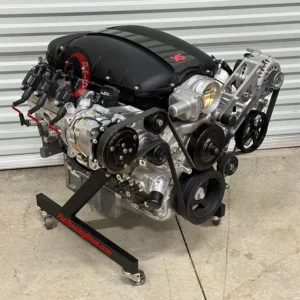
A complete engine commonly includes more of the bolt-on hardware needed to run, although the exact contents vary. Confirm whether it includes the intake manifold, injectors, throttle body, fuel rails, exhaust manifolds, starter, alternator, A/C compressor, power steering pump, wiring harness, and ECU.
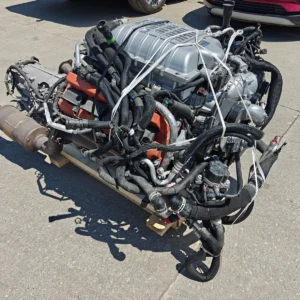
A dropout powertrain package can include the engine, transmission, accessories, harness, computer, and sometimes additional supporting components. For an engine swap or a shop trying to control labor time, this is often the strongest value. More complete does not always mean better, but a package with the right components can save serious time.
How to Choose a Replacement Engine by Mileage and Condition
Mileage is a useful buying factor, but it is not the whole story. A lower-mileage engine is usually attractive because it may have less wear on internal components and accessories. Still, maintenance history, prior use, storage conditions, and inspection results matter just as much.
A well-kept higher-mileage highway engine can be a smarter choice than a low-mile unit that sat outdoors or came from a vehicle with unknown damage. Ask what condition information is available. Compression or leak-down results, oil condition, visible damage, donor vehicle details, and warranty terms can give you a clearer picture than the odometer number alone.
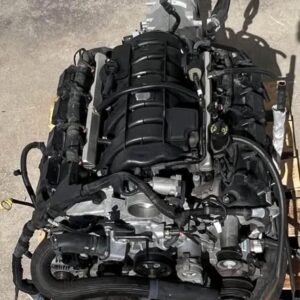
Look closely at the pictures and description for signs of impact damage, broken mounting ears, cut harnesses, cracked plastic components, missing sensors, or a damaged oil pan. A used engine may show normal cosmetic wear. That is different from an engine that has been handled roughly, exposed to water, or stripped of the components you need.
For remanufactured or new engines, focus on what was rebuilt or replaced, what accessories are included, and what installation requirements apply to the warranty. These engines can be the right call when long-term reliability is the priority, but they may require you to reuse or source external parts.
Do Not Underestimate Electronics and Fuel Systems
Modern engines are part of a network. The ECU talks to the transmission, body control module, gauge cluster, security system, pedal assembly, and emissions equipment. The engine itself may be perfect, yet the vehicle will not start or drive correctly without the right control strategy.
Before purchasing, determine whether you are retaining the factory ECU and harness, using the donor electronics, or running a standalone system. For late-model swaps, get clear on immobilizer or security programming, drive-by-wire pedal needs, electronic throttle compatibility, and transmission control.
Fuel system requirements can also change the budget. Port-injected engines and direct-injected engines need different supporting parts. Some performance packages require greater fuel volume, upgraded injectors, a different fuel pump, or a return-style system. Make the fuel plan before the engine arrives, not after it is hanging from the hoist.
Build a Real Budget Around the Installed Engine
The listing price is only one line on the build sheet. Account for freight, fluids, filters, gaskets, mounts, plugs, belts, hoses, cooling upgrades, exhaust work, programming, labor, and the small hardware that inevitably comes up during installation.
For a direct replacement, it is smart to replace easy-access wear items while the engine is out. Rear main seals, water pumps, thermostats, spark plugs, coils when needed, motor mounts, and oil pan gaskets are far easier to handle before the engine is installed.
For a swap, leave room for fabrication and tuning. Even a well-matched package may need custom exhaust, a revised cooling system, a modified driveshaft, or calibration work. That does not make the engine a bad choice. It just means the real value is the complete path to a running vehicle, not the initial advertised price.
Ask These Questions Before You Buy
Before you commit, make sure you can answer these five questions:
- Does this engine match my vehicle or swap chassis in year, generation, and physical configuration?
- What parts are included, and what parts will I need to transfer or buy separately?
- Will it work with my current transmission, or should I buy a matched package?
- What wiring, ECU, pedal, fuel-system, and programming requirements are involved?
- What condition details, mileage information, and warranty coverage come with this unit?
Clear answers protect your budget and speed up the install. If a listing cannot tell you what comes with the engine, treat that as a reason to pause and verify before paying.
The best replacement engine is the one that gets your vehicle running with the fewest surprises. Match the package to the work ahead, get the fitment details in writing, and buy enough drivetrain to finish the job instead of starting another parts hunt.


2 Comments